In the world of competitive exams, board exams or any high-stakes test most students spend hours reading, highlighting and re-reading notes — only to realize during exam that they can’t recall half of what they studied. Sound familiar?
There is a simple yet incredibly powerful method that can change this completely: the Blurting Technique (also known as Brain Dumping). It’s one of the most effective active recall strategies and it takes almost no extra time or resources.
In this detailed guide I’ll break down exactly what blurting technique is and why it works so well, how to use it step-by-step, pro tips, common mistakes and how to integrate it into your study routine for maximum results.
What is Blurting Technique?
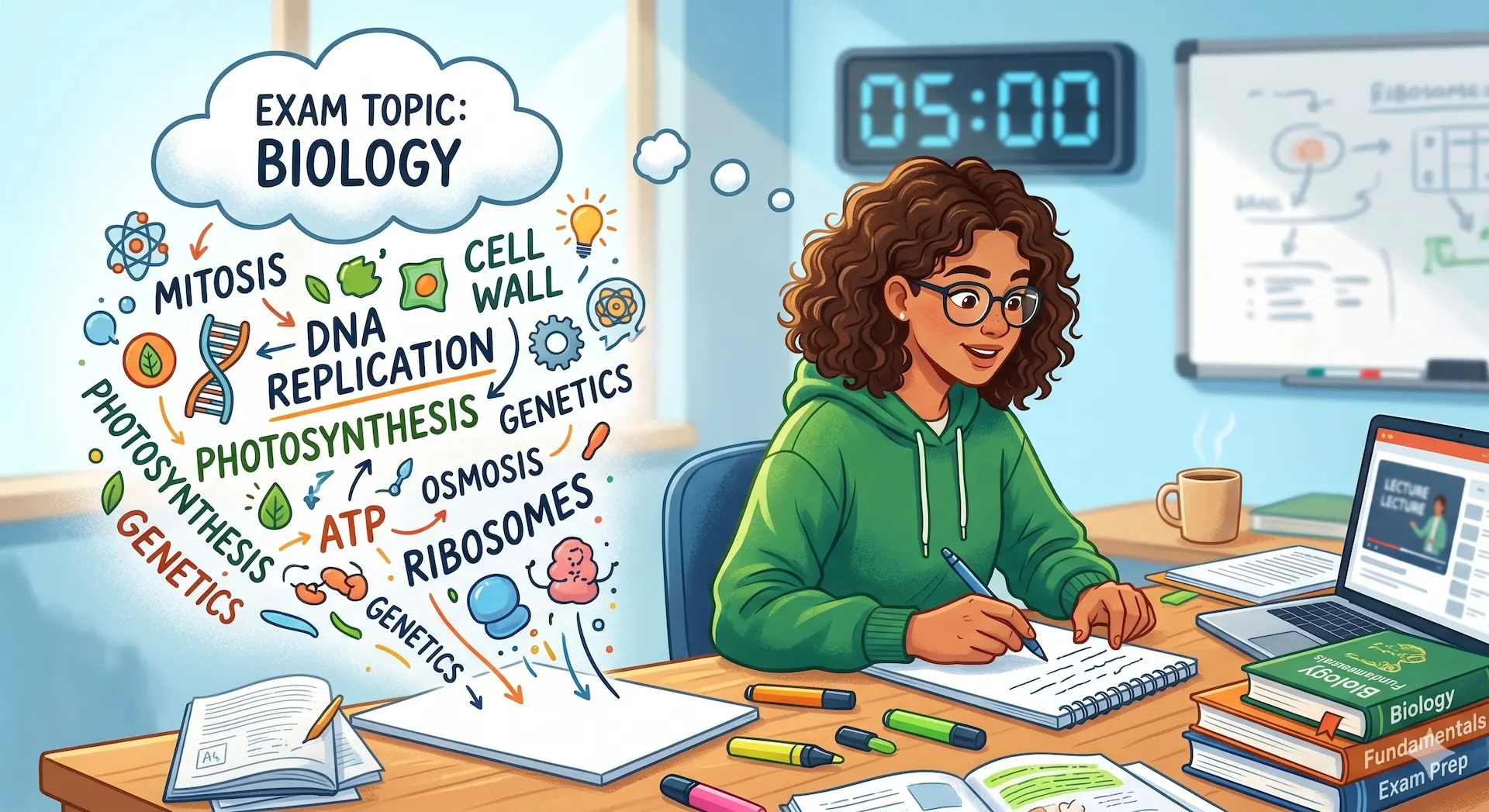
Blurting is an active recall method where you deliberately force your brain to retrieve information from memory without looking at your notes.
Here’s core process:
- Study a topic for a short time.
- Close your books and notes completely.
- Write down (or “blurt out”) everything you can remember about that topic on a blank sheet.
- Compare what you wrote with your actual notes and fill in the gaps.
- Repeat the process until you can recall the topic almost perfectly.
It’s raw, messy and intentionally uncomfortable and that discomfort is exactly why it works.
Why Blurting Technique is So Effective
Passive studying (re-reading, highlighting) creates an illusion of competence. You feel like you know material because it looks familiar but your brain hasn’t practiced retrieving it.
Blurting does opposite. It uses retrieval practice, one of the most scientifically proven learning techniques. Studies from cognitive psychology show that actively recalling information strengthens memory pathways far more than re-reading.
Key benefits:
- Reveals real knowledge gaps instantly — No more false confidence.
- Improves long-term retention dramatically.
- Trains you for actual exam conditions where no notes are available.
- Saves time in long run because you focus only on weak areas.
- Reduces exam anxiety as you become more confident in your recall ability.
Many top-performing students and educators swear by this method.
Step-by-Step Guide: How to Use Blurting Effectively
Step 1: Choose a Focused Topic Don’t pick an entire chapter. Break it down into small, manageable chunks. Examples:
- “Human Digestive System” instead of entire Biology
- “Quadratic Equations” instead of whole Algebra chapter
Step 2: Quick Initial Review (5–15 minutes) Read your notes or textbook actively. Focus on understanding concepts, formulas, diagrams, dates, definitions and processes. Don’t just skim.
Step 3: Close Everything Put away all materials. No phone. No tabs open. This is crucial.
Step 4: The Blurting Session Take a fresh blank paper (or use a whiteboard). Write down everything you remember.
- Use bullet points, flowcharts, diagrams, mind maps — whatever feels natural.
- Don’t worry about perfection, spelling or neatness. Speed and volume matter more.
- Explain concepts in your own words.
Step 5: Compare and Color-Code Open your notes and check your blurt paper. Use a red pen (or different color) to:
- Add missing information
- Correct mistakes
- Mark what you got right (maybe in green)
Step 6: Targeted Re-Study & Repeat Focus only on red parts. Study those gaps again then blurt entire topic once more. Keep repeating until your blurt paper is mostly green.
Advanced Tips to Maximize Results
- Time your sessions: Keep each blurt between 10–20 minutes.
- Use a whiteboard: It’s reusable, encourages bold writing and reduces perfectionism.
- Combine with other techniques:
- Use Feynman Technique first (explain simply) then blurt.
- Follow up with practice questions.
- Track your progress: After each round, rate your recall percentage (70% → 85% → 95%).
- Digital blurting: Use Notion, GoodNotes or even a blank Google Doc if you prefer typing.
- Subject-specific adaptations:
- Science: Draw diagrams and label them from memory.
- Mathematics: Solve problems without looking at formulas.
- History: Write timelines, causes-effects, key personalities.
- Literature: Recall quotes, themes, character sketches.
Common Mistakes Students Make
- Making initial review too long.
- Trying to write neatly during blurting (this slows you down).
- Skipping comparison step.
- Not repeating blurting on weak areas.
- Using blurting as only study method (it works best combined with understanding first).
When Should You Use Blurting Technique?
- After completing a chapter (to check initial understanding)
- During weekly revision
- In last 15–20 days before exams (intensive mode)
- As a quick diagnostic tool when you feel “I know this” but want to confirm
Real Student Results
Students who consistently use blurting often report:
- Better performance in mock tests
- Reduced forgetting curve
- More confidence walking into the exam hall
- Less last-minute panic
Final Thoughts
Blurting technique might feel difficult in beginning. Your first few attempts may show you remember far less than you thought and that’s okay. That honest feedback is whole point.
Students who succeed aren’t necessarily smartest. They’re the ones who use smart, evidence-based methods like active recall and blurting to study efficiently.
Your Action Step Today: Pick one topic you think you know well. Spend 10 minutes reviewing it then close your notes and blurt everything. You’ll be surprised by results — and probably a little shocked too.
Once you experience the power of blurting it becomes addictive. You’ll never go back to passive re-reading again.
Start blurting. Start winning.