The Real Reason Smart Students Still Fail in Exams
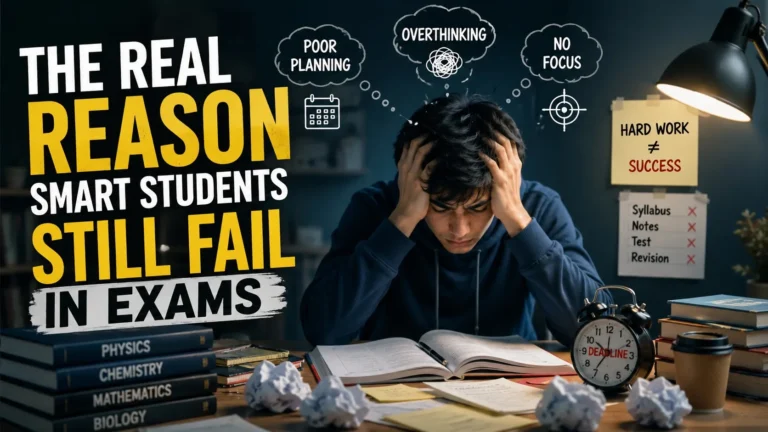
Smart students often fail exams not because of low intelligence, but due to a gap between knowing the material and performing under pressure.

Smart students often fail exams not because of low intelligence, but due to a gap between knowing the material and performing under pressure.

Learn why results often lag behind effort, how to shift from outcome obsession to process mastery, track leading indicators, reframe plateaus, protect your energy, and keep showing up until the work compounds.
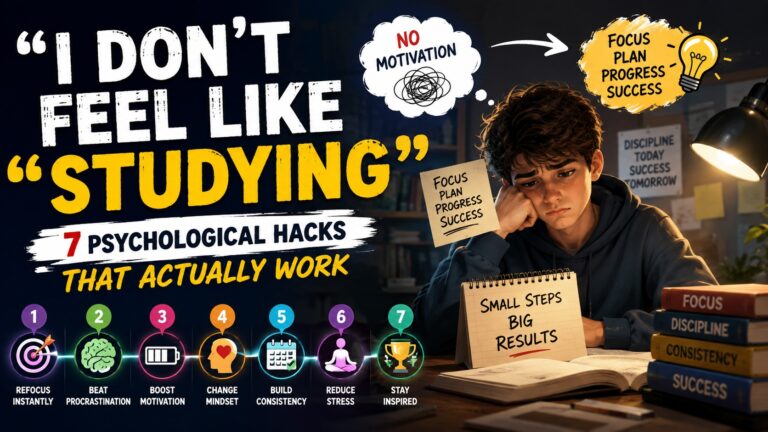
These 7 psychological hacks help you start even when motivation is zero. Science-backed techniques to beat procrastination and build real momentum.
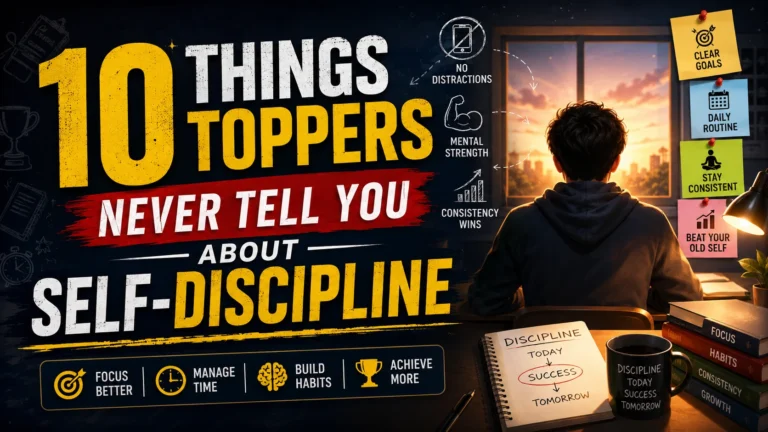
Learn how high achievers actually build consistency, recover from failure and sustain focus without relying on motivation.
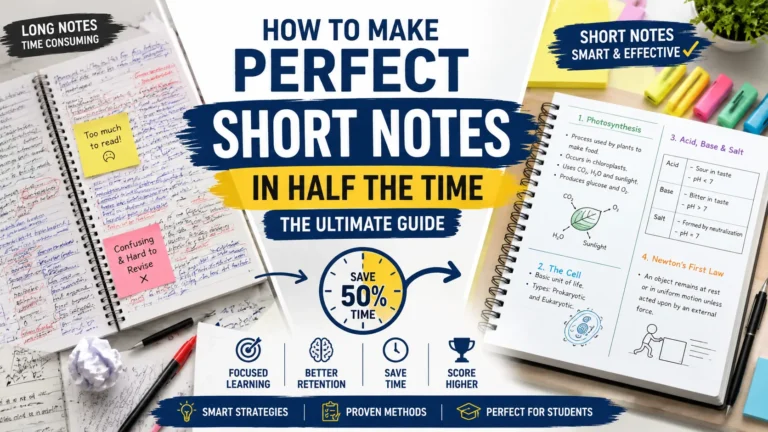
Learn how to create perfect short notes in half the time using proven methods like Cornell, Outline, and speed hacks. Boost retention, save hours, and study smarter with this ultimate guide.
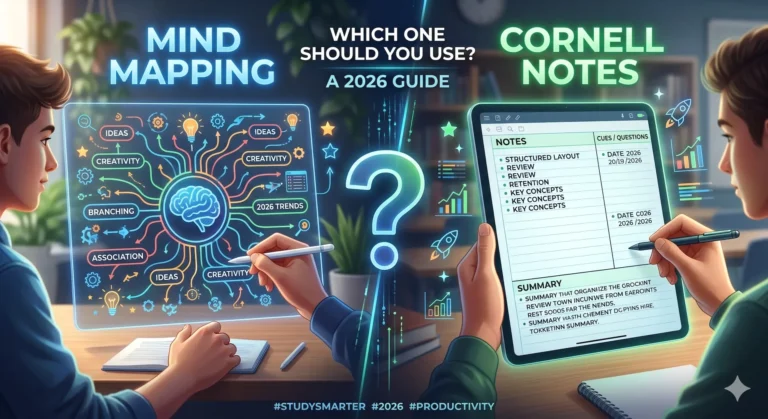
Discover the ultimate comparison of Mind Mapping vs Cornell Notes in 2026. Learn which note-taking method is best for your learning style, plus powerful hybrid strategies and AI tools to boost retention and productivity.
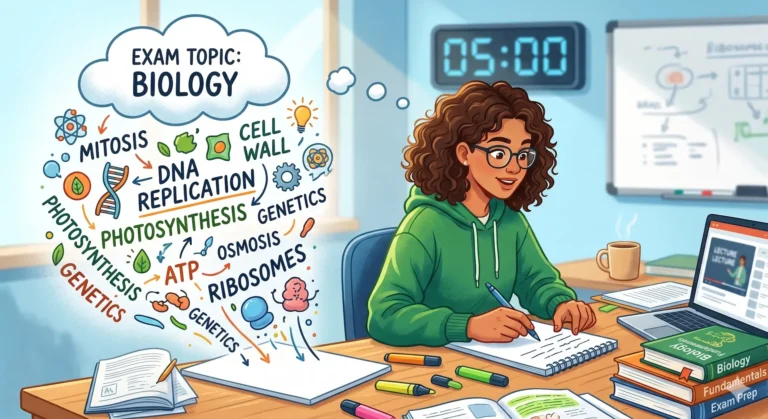
Discover the Blurting Technique - the fastest and most effective active recall method to check your exam preparation. Learn step-by-step how to use brain dumping to identify knowledge gaps, boost retention, and score higher
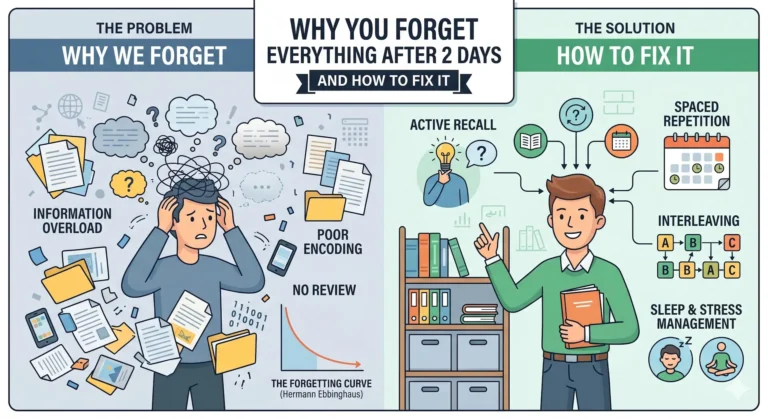
Struggling to remember what you studied just 2 days ago? Discover the science behind the Ebbinghaus Forgetting Curve and proven techniques like active recall and spaced repetition to dramatically improve your memory retention. Stop forgetting everything and start learning smarter.

Discover 3 most powerful active recall methods that every topper uses — Blurting Method, Feynman Technique, and Spaced Repetition with Anki. Learn how to combine them for better memory, deeper understanding, and higher exam scores.
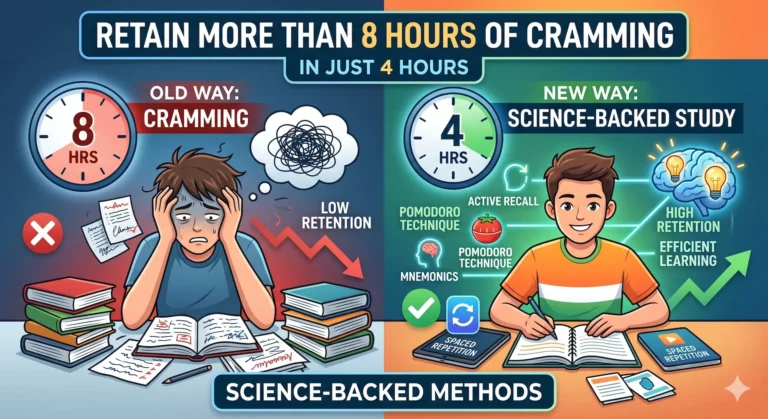
Discover science-backed techniques like active recall, spaced repetition and Feynman method to study just 4 hours and retain more than 8 hours of traditional cramming.