You’ve been putting in work. Showing up. Doing hard, unglamorous things and still… nothing seems to move.
The scale barely budges. Sales numbers stay flat. Skill doesn’t click. Project feels stuck. Feedback is quiet. Progress you expected by now simply isn’t there.
This is one of most common places people quit — not because work is impossible but because silence between effort and outcome feels like proof that it’s not working.
It isn’t.
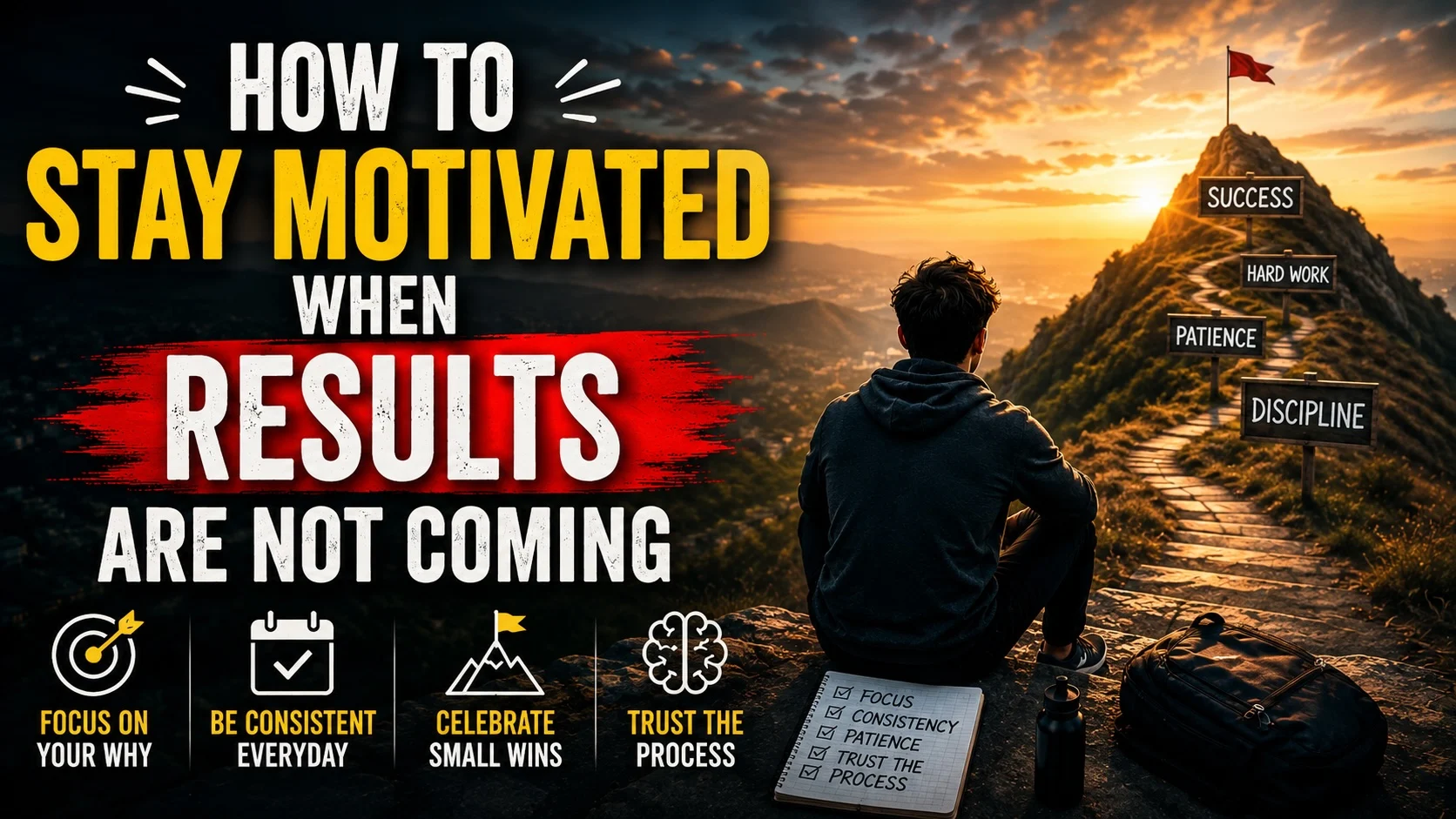
The Lag Is Normal (And Necessary)
Almost every meaningful form of progress has a delay built into it. Results are lagging indicators. Effort, consistency and learning are leading ones.
You plant seeds, water them, protect them and for a long time ground looks exactly same. Then, often suddenly, something breaks through. This same pattern shows up in fitness, writing, business, relationships, learning a language, building a craft or changing a habit.
Early phase is mostly invisible foundation work: neural pathways strengthening, systems forming, recovery capacity improving, taste refining, decision-making getting sharper. None of that shows up cleanly on scoreboard yet. Measuring only final number during this phase is like judging a marathon by first three kilometres.
When you treat lag as failure, motivation collapses. When you treat it as the normal physics of growth you can keep going.
Shift From Outcome Obsession to Process Mastery
Single most useful move is to stop making your daily emotional state depend on a result you don’t fully control.
Replace pure outcome goals with process goals:
- Instead of “I need to lose 8 kg by October,” aim for “I will train four times a week and hit my protein target daily.”
- Instead of “I need 10 new clients this month,” aim for “I will make 12 high-quality outreach conversations every week.”
- Instead of “I need to finish book,” aim for “I will write 500–700 words five days a week.”
Process goals are fully under your control. Hitting them creates frequent evidence that you are kind of person who follows through. That identity is far more motivating than waiting for an external number to move.
Track What Actually Moves
Keep a simple private log of inputs and leading indicators:
- Sessions completed
- Quality of focus
- Recovery metrics (sleep, energy, mood)
- Small skill improvements
- Feedback received
- Problems solved
Review it weekly. A visible streak of consistent effort is often enough to carry you through flat periods. Many people discover they were progressing whole time — they just weren’t measuring right things.
Redefine Progress During Plateaus
Plateaus are not evidence that nothing is happening. They are frequently consolidation phase. Body is adapting. Skill is integrating. System is stabilising.
Look for secondary signs:
- Form is cleaner
- Recovery is faster
- Decisions feel less forced
- You bounce back from setbacks quicker
- The work feels slightly more automatic
These are real gains even when primary metric is quiet.
Reconnect to Deeper Reason
Results are usually a means, not the end. Ask yourself:
What does this outcome actually unlock? Who does it help? What kind of person am I becoming by pursuing it?
Write answer down. Revisit it when motivation dips. Intrinsic reasons (identity, contribution, growth, freedom) last longer than external ones (approval, status, numbers). When the “why” is clear temporary absence of results hurts less.
Shrink the Horizon
Distant goals feel heavy. Short experiments feel manageable.
Set 7–14 day focused blocks: “For next ten days I will only optimise consistency and one specific skill.” At end of block review what you learned and adjust. Frequent feedback loops reduce emotional weight of delayed big results.
Protect the Machine
Motivation dies fastest under fatigue, poor sleep, constant pressure and isolation. Treat recovery as part of work not a reward for finishing it. A rested mind finds it far easier to keep showing up when results are slow.
Use Identity and Environment
See yourself as “someone who trains / writes / builds / practices consistently” rather than “someone trying to achieve X.” Design your surroundings so next action is path of least resistance. Remove friction. Add cues. Identity and environment outperform willpower over long stretches.
Get Honest External Eyes
Share process (not just desired outcome) with a coach, peer or trusted friend who can see progress you miss. Isolation amplifies the feeling that nothing is happening. A clear external perspective often reveals movement you had stopped noticing.
Final Mindset Adjustments
- Treat setbacks and slow periods as data, not verdicts.
- Celebrate execution of plan not only the final outcome.
- Expect dip. Almost every long pursuit has a phase where results feel absent. Knowing this removes surprise that kills motivation.
- Compare only to your own previous baseline of effort and skill — never to someone else’s highlight reel.
Consistency compounds. People who look like they “suddenly” succeeded usually spent a long invisible period doing the work while scoreboard stayed quiet. They simply refused to let lag convince them to stop.
Keep process clean, sustainable and honest. Show up for work you can control. The results eventually have no choice but to follow.
The ground is not empty. It’s just not ready to show you yet.